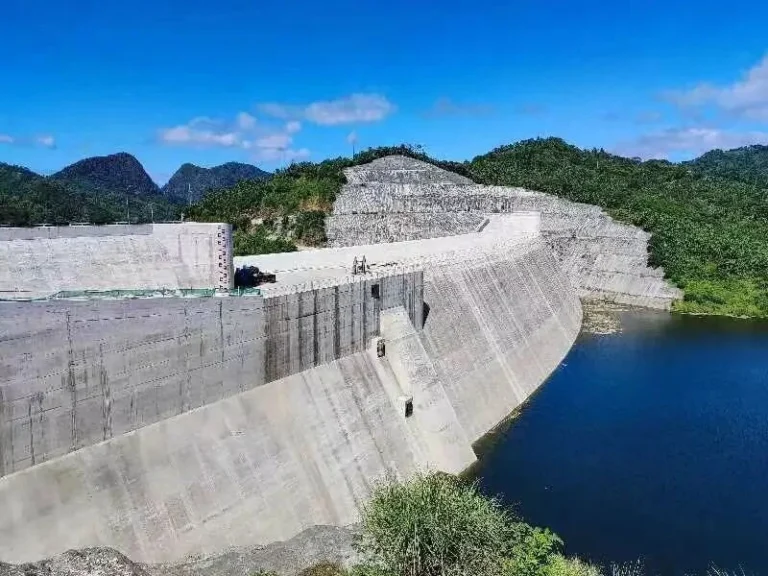
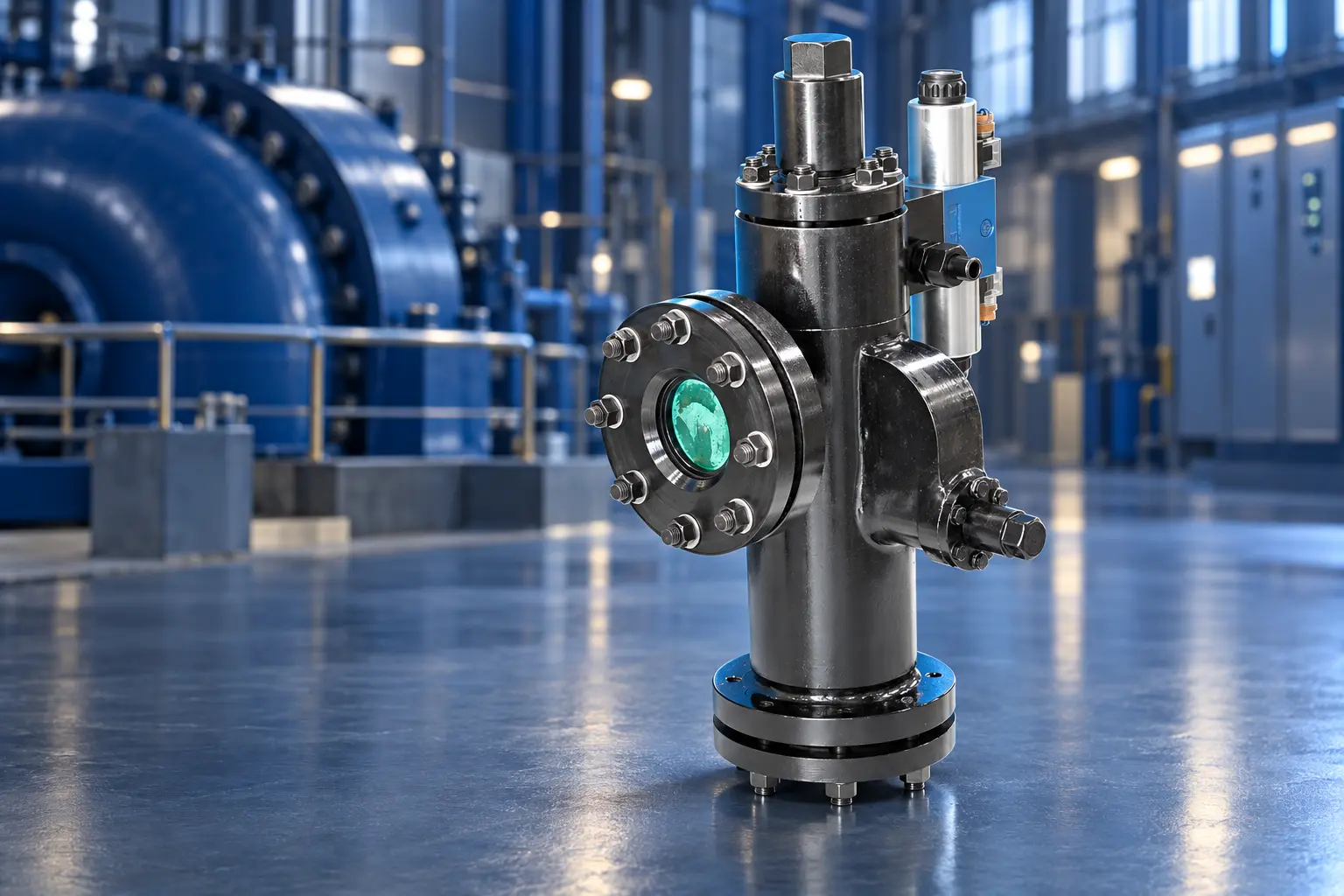
Guide vane closure is an important part of the hydraulic control process of a hydro-generator unit. The closing action must be coordinated with the characteristics of the turbine, the hydraulic circuit and the operating requirements of the unit.
If the servomotor closes at one constant speed throughout the entire stroke, the closing process may not provide the transition control required by the project. For this reason, some hydraulic control circuits use a segmented closing device to divide the closing action into two stages.
What Is the FDF Segmented Closing Device?
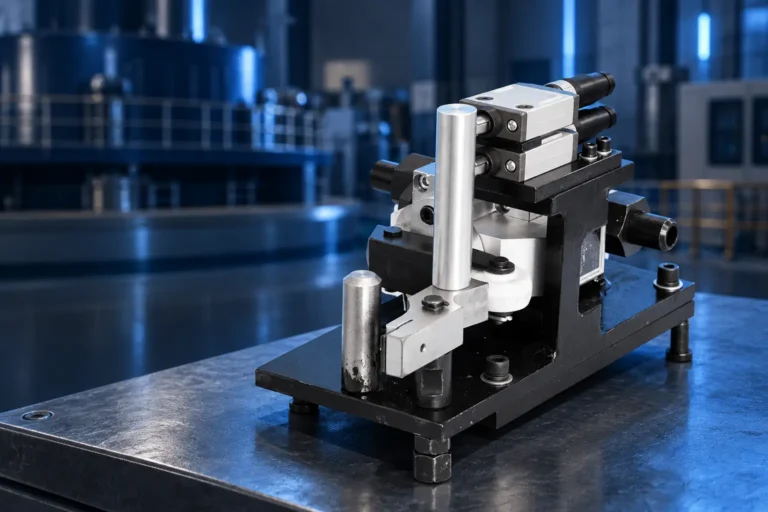
The NSD Electric FDF Segmented Closing Device is a two-stage valve installed in the oil circuit between the turbine governor and the guide vane servomotor.
Its purpose is to control the closing speed of the guide vane servomotor through a fast initial closing stage followed by a slower closing stage. This arrangement helps manage the transition during guide vane closure and helps prevent water hammer in the hydraulic system.
The FDF device is not a replacement for the turbine governor. Instead, it works as a hydraulic component within the closing circuit, with its settings and interfaces coordinated with the governor and servomotor.
How the Two-Stage Closing Process Works
During the first stage, the device allows a faster closing action. This supports a timely response when the guide vanes need to move toward the closed position.
During the second stage, the closing speed is reduced. The slower movement provides a controlled transition for the remaining part of the closing process.
The two stages are combined in one hydraulic device. According to the product description, the closing time can be adjusted precisely and conveniently. This adjustment affects the closing duration without changing other control functions.
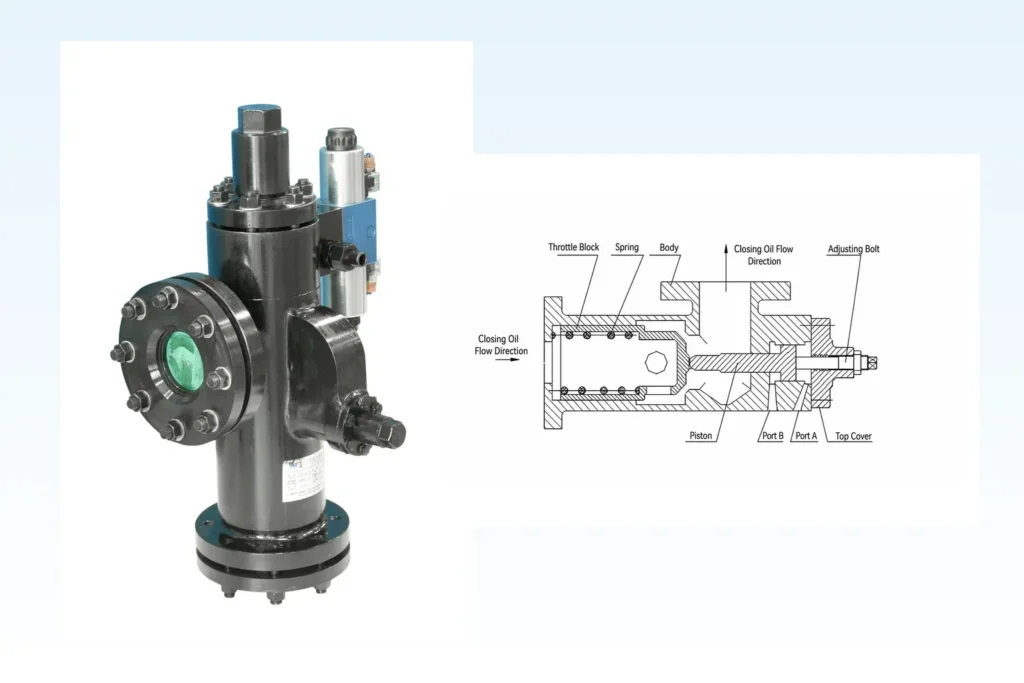
The FDF structure includes a main body, throttle block, spring, piston, ports and an adjusting bolt. These components form the hydraulic mechanism used to regulate the closing process. The exact setting should be determined according to the unit’s hydraulic circuit and commissioning requirements.
Features Relevant to Project Selection
The FDF Segmented Closing Device is designed with a fine adjustment mechanism and sealing structure for hydraulic control applications. The official product description also highlights compact installation, fast response and accurate transition control.
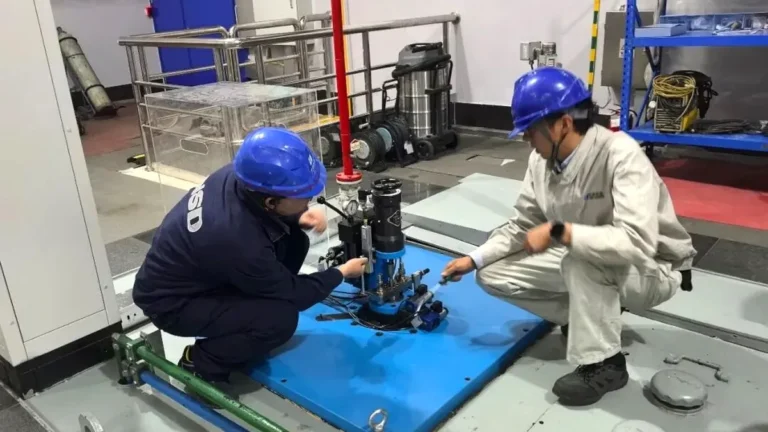
For a new hydropower project, the selection review should include the rated pressure, hydraulic connection, required closing mode and installation orientation. For a retrofit project, the existing governor, servomotor and oil-piping arrangement should also be checked before replacing or adding the device.
Technical Specifications
The FDF series is available with the following published technical parameters:
- Rated pressure: 2.5 MPa, 4.0 MPa and 6.3 MPa
- Power supply voltage: 220 VDC, 110 VDC or 220 VAC
- Operating temperature: 5–40°C
- Relative humidity: ≤95% R.H.
- Installation method: horizontal or vertical installation supported
These parameters are product-level reference values. Final configuration still requires confirmation of the project’s hydraulic pressure, interface dimensions, shutdown circuit and site installation conditions.
What Should Be Checked During Retrofit?
Before installing an FDF device on an existing unit, the project team should review:
- The rated pressure of the existing hydraulic circuit.
- The oil-line connection between the governor and the guide vane servomotor.
- The required fast-closing and slow-closing sequence.
- The available horizontal or vertical installation space.
- The required closing time and adjustment range.
- The coordination between the FDF device, governor and servomotor.
These checks help ensure that the selected device matches the existing hydraulic arrangement. A product model should not be selected from pressure rating alone.
Conclusion
The FDF Segmented Closing Device provides two-stage hydraulic control for guide vane servomotor closure. By combining fast initial closing with a slower second stage, it helps control the transition of the closing process and helps prevent water hammer.
For new installations and retrofit projects, the correct application depends on the complete hydraulic circuit, pressure class, interfaces, closing sequence and installation conditions. A project-specific engineering review is therefore an essential part of the selection process.