A hydropower governor depends on the hydraulic equipment that carries out its commands. For plant owners considering an upgrade, understanding this part of the system helps define what needs to be retained, replaced or checked.
The self-centering main control valve is one component worth examining. Its operating principle also raises a practical question: what happens when automatic control is interrupted?
From Governor Command to Servomotor Movement
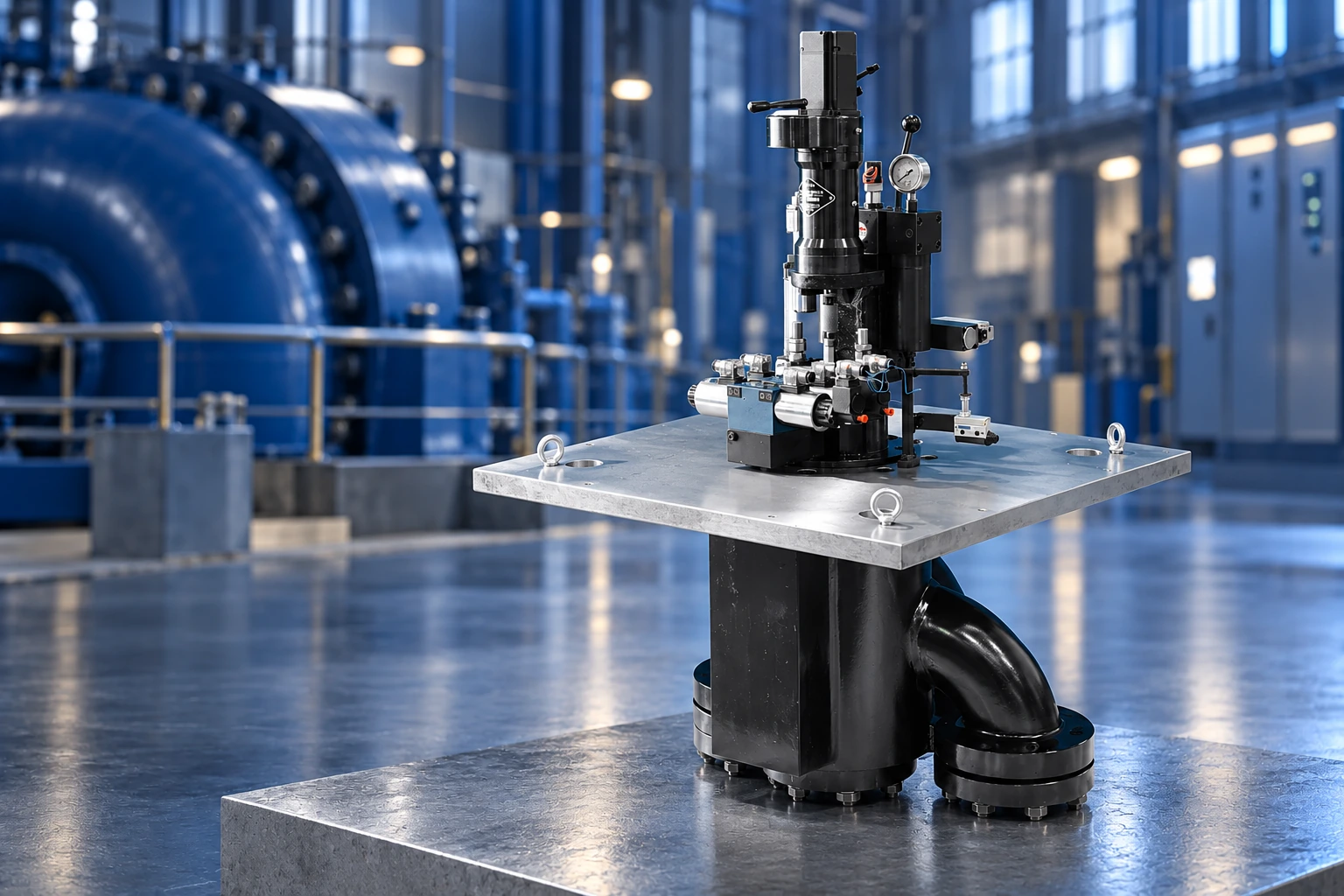
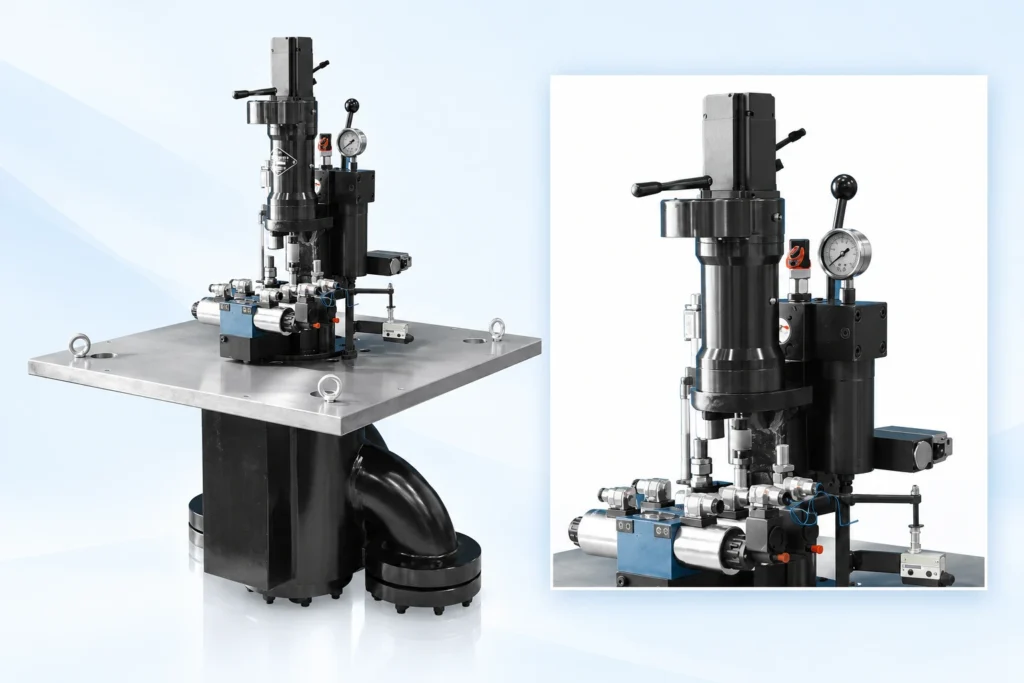
NSD Electric’s self-centering main control valve solution uses a compound main pressure distribution valve with an independent dual-channel control structure.
During automatic operation, a proportional valve or servo/stepper motor controls oil distribution through the main valve, enabling movement of the main servomotor. This provides the connection between the governor’s electrical control and the hydraulic mechanism.
According to NSD’s product description, the main valve returns automatically to its neutral position following power loss or a switch to manual operation. A mechanical manual operating mechanism can then control the main valve and main servomotor.
Understanding the Meaning of “Self-Centering”
The distinction is between the position of the main valve and the position of the turbine’s guide vanes.
NSD describes automatic return to neutral as a way to maintain the current operating condition. It should therefore not be interpreted as an instruction to close the guide vanes fully. The neutral-return function concerns the main valve; shutdown behavior must be understood from the complete hydraulic and protection design.
For a retrofit discussion, engineers should ask separate questions: what initiates neutral return, what happens to the servomotor during the transition, and which equipment performs an emergency shutdown? Keeping these questions separate makes the required operating sequence easier to specify and review.
What to Review Before a Retrofit
A useful starting point is a description of how the existing equipment operates, supported by hydraulic drawings, control diagrams and maintenance records. This allows the proposed replacement to be assessed against the actual installation.
The project review should establish:
- Hydraulic requirements: What operating pressure, servomotor movement and oil-flow requirements must the replacement accommodate?
- Control interfaces: How will the existing governor connect to the proposed electro-hydraulic control arrangement?
- Operating transitions: What behavior is required during automatic-to-manual transfer, loss of electrical power and restoration of control?
- Physical interfaces: Which mounting dimensions, pipe connections, linkage arrangements and maintenance clearances need to be confirmed?
- Protection coordination: How will the proposed equipment interact with the plant’s existing shutdown and protection circuits?
These are questions to resolve during engineering review rather than assumptions to make from a product name or external appearance.
Include the Existing Oil System in the Assessment
The condition of the surrounding hydraulic system deserves attention alongside the valve itself.
The U.S. Bureau of Reclamation’s governor maintenance guidance includes checking oil levels, maintaining strainers and filters, and investigating significant changes in pump operating time. It also recommends laboratory analysis of governor oil before scheduled maintenance and checking oil compatibility when replacement is necessary.
For a retrofit project, these records provide useful information to share with the equipment supplier. The review can then address both the proposed component and the condition of the system into which it will be installed.
Define Acceptance Checks Early
Before equipment selection is finalized, the plant owner and supplier should agree on how the proposed operating functions will be demonstrated.
A project-specific acceptance plan can identify the required observations during automatic operation, transfer to manual control, neutral return and interaction with existing protection functions. It should also define the applicable test conditions and acceptance criteria.
This gives everyone a common basis for evaluating the installation and documenting the result.
For projects considering a self-centering main control valve, NSD Electric can be contacted with the existing hydraulic drawings, equipment information and intended scope of modification. A clear description of the required behavior is the starting point for a useful technical discussion.