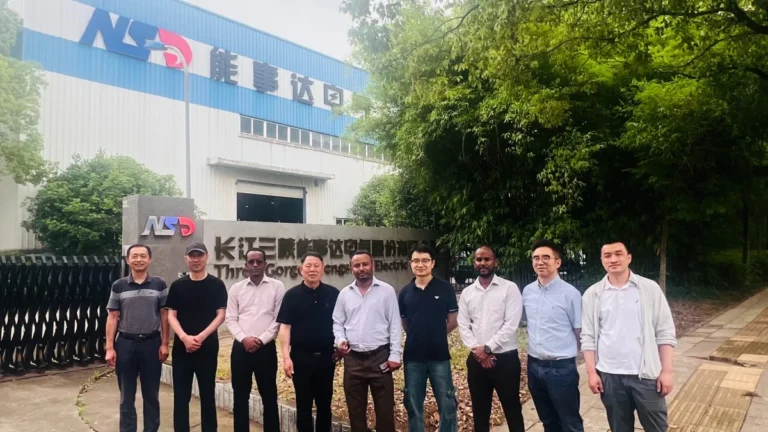
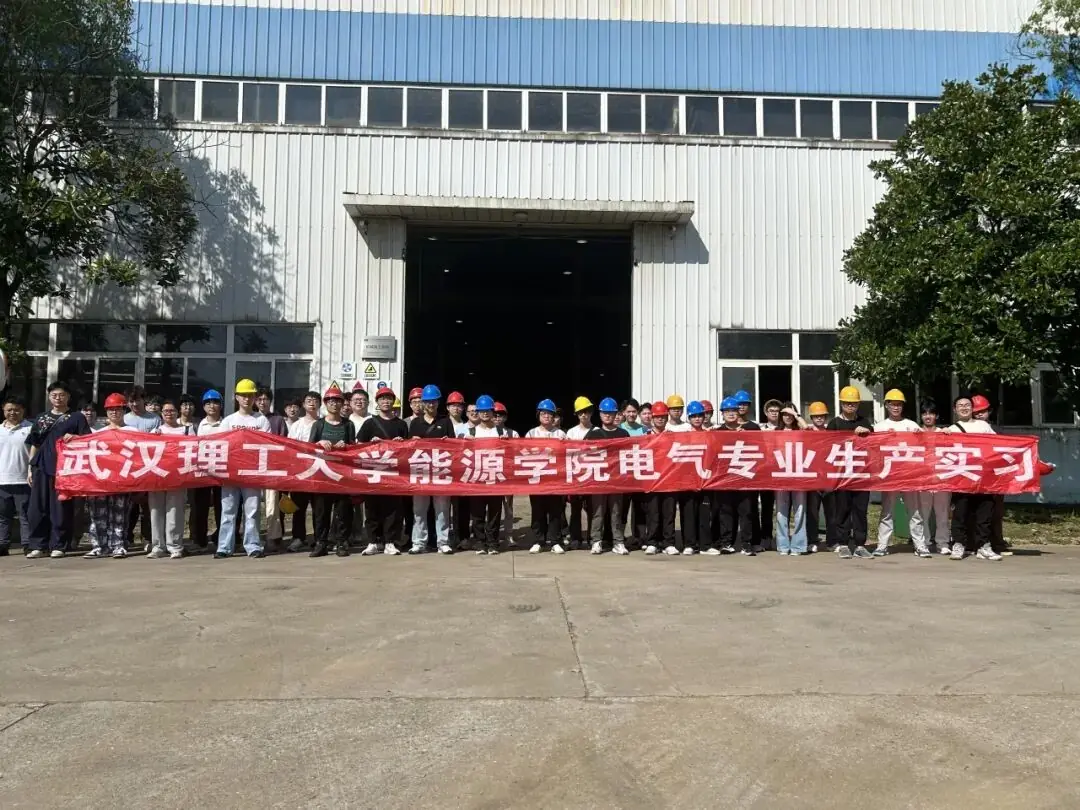
This summer, electrical engineering students from the School of Automation at Wuhan University of Technology visited NSD Electric’s Hanyang manufacturing base for the company’s 2026 industrial internship program.
As an important practical training base that has maintained close cooperation with the university for many years, NSD Electric is committed to supporting engineering education through real-world industrial experience. The program provides students with an opportunity to connect classroom knowledge with actual manufacturing, testing, and engineering practices while gaining a deeper understanding of modern power control technologies.
Exploring Hydropower Control Equipment Manufacturing
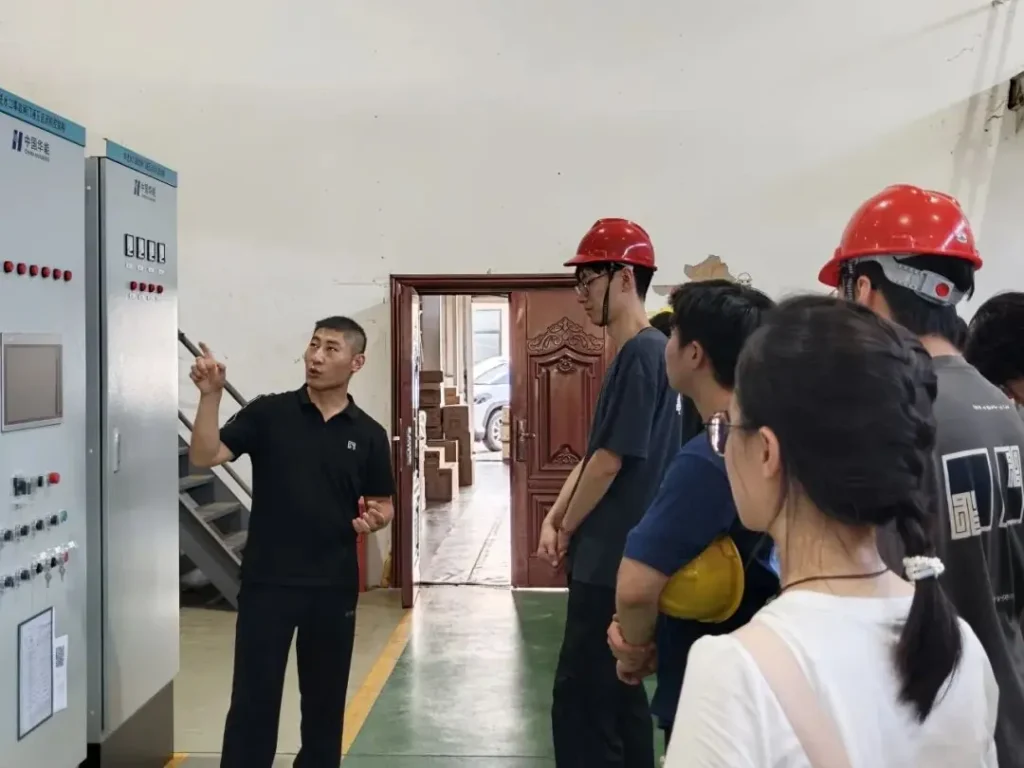
Accompanied by NSD Electric’s technical team, the students toured several key areas of the Hanyang facility, including the manufacturing workshop, machining center, system assembly area, commissioning and testing center, and technology development department.
During the visit, NSD engineers introduced the complete production process of power plant control equipment, from component processing and cabinet assembly to system integration, functional testing, and final inspection. The students also learned how production planning, process control, and quality management work together to ensure the reliability of equipment used in hydropower and pumped storage projects.
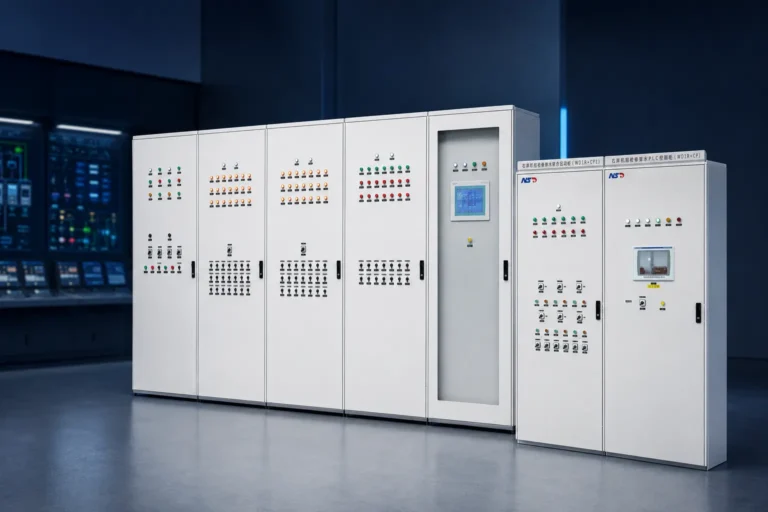
As a specialist in hydropower secondary control equipment, NSD Electric develops and supplies turbine governor systems, generator excitation systems, automation and auxiliary control solutions, as well as retrofit services and spare parts for existing power plants. These products require close coordination between electrical design, mechanical manufacturing, control programming, system integration, and on-site engineering.
By observing these processes firsthand, the students gained a clearer understanding of how the electrical and automation principles studied in the classroom are transformed into reliable engineering systems.
Experiencing the Precision Behind Modern Manufacturing
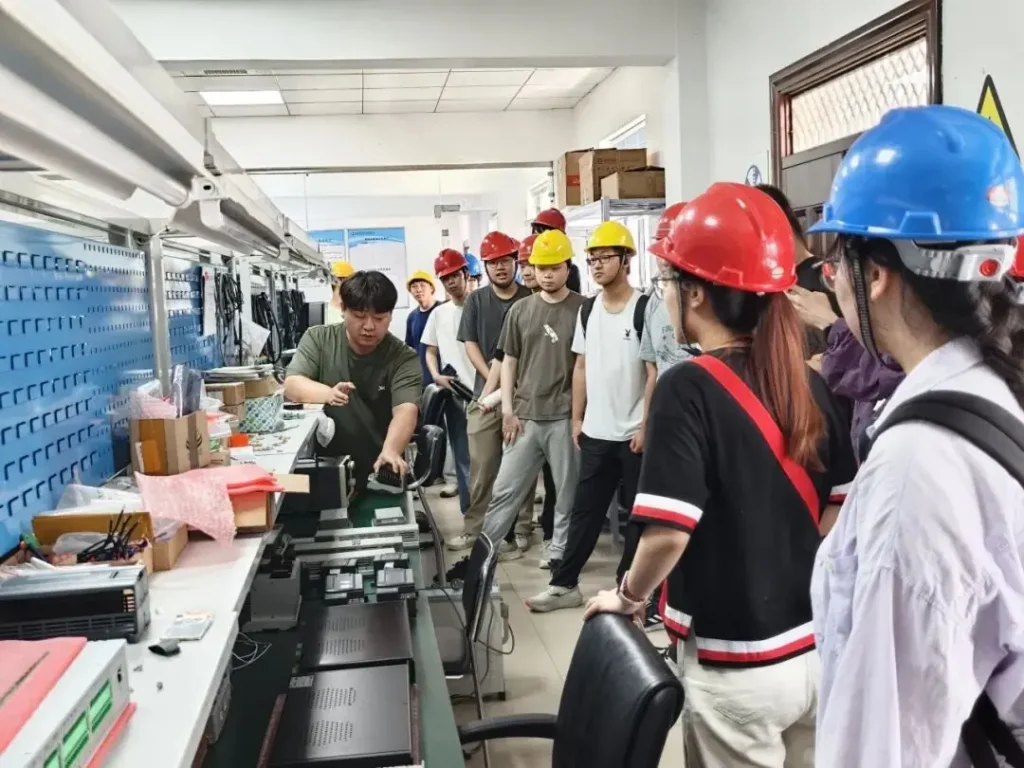
From precision machining to complete system assembly, and from parameter configuration to functional testing, every stage of production demonstrated the importance of accuracy, standardization, and quality control.
NSD Electric’s technical specialists explained how each component and subsystem must meet specific engineering requirements before being integrated into a complete control solution. They also introduced the role of testing and commissioning in verifying control logic, signal processing, communication functions, protection mechanisms, and system performance.
For the students, the visit provided more than an overview of manufacturing equipment. It offered a direct view of the disciplined processes behind dependable hydropower control systems.
They saw how engineering drawings guide production, how control cabinets are assembled and wired, how software and hardware are integrated, and how test procedures are used to identify and resolve potential issues before equipment is delivered to a project site.
Connecting Engineering Theory with Practical Applications
During the internship, NSD Electric engineers also provided technical sessions covering product structures, electrical principles, control systems, and industry applications.
Drawing on real hydropower and pumped storage projects, the engineers shared examples of technical challenges that can arise during equipment design, system integration, commissioning, and plant operation. They explained how engineering teams analyze project requirements, coordinate different technical disciplines, and develop practical solutions under real operating conditions.
The students listened carefully and actively raised questions about control logic, equipment reliability, system testing, and engineering implementation. The open discussion created an engaging learning environment and helped them develop a more practical understanding of electrical engineering and automation.
This combination of workshop observation, technical explanation, and direct communication with experienced engineers enabled the students to see how theoretical knowledge is applied throughout the lifecycle of an engineering project.
Strengthening University–Industry Collaboration
In recent years, NSD Electric has continued to deepen its cooperation with Wuhan University of Technology by improving practical training platforms and exploring new approaches to collaborative education.
The 2026 industrial internship not only helped students better understand current developments in the power and electrical equipment industries, but also gave them greater insight into the technical skills, professional standards, and teamwork required by modern engineering companies.
For universities, cooperation with industrial enterprises helps align engineering education more closely with technological development and real market needs. For companies, such programs create opportunities to share practical experience, engage with emerging engineering talent, and contribute to the long-term development of the industry.
Looking ahead, NSD Electric will continue to leverage its manufacturing, engineering, and project experience to support practical education. Through closer university–industry cooperation, the company aims to help cultivate more application-oriented engineering professionals with strong technical knowledge, practical capabilities, innovative thinking, and a sense of social responsibility.
By bringing education and industry closer together, NSD Electric and Wuhan University of Technology are jointly creating a stronger foundation for future engineering talent and sustainable industry development.