A hydropower plant depends on more than the turbine governor and excitation system. Its daily operation also involves gate equipment, hydraulic pressure units, compressed-air systems, drainage pumps, HVAC equipment, water filters, and other auxiliary devices.
These systems have different control requirements, but they must work within the same plant operating environment. A suitable automation and auxiliary control system allows operating personnel to monitor equipment status, manage control tasks, and maintain communication between field devices and the upper-level monitoring system.
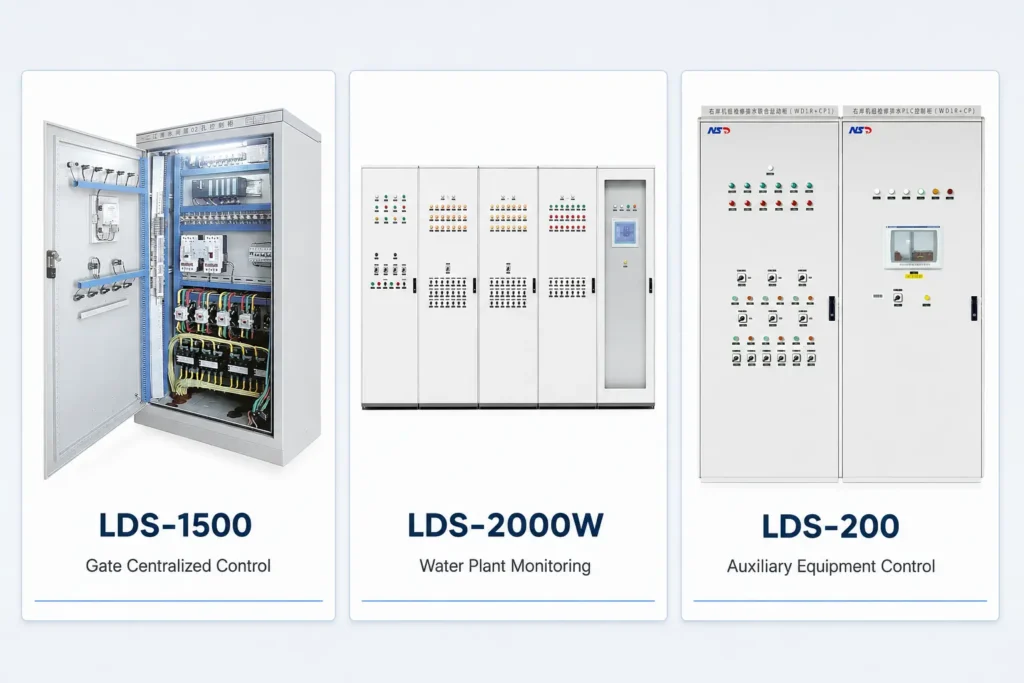
NSD Electric’s LDS product portfolio includes dedicated solutions for power plant auxiliary equipment, centralized gate control, and water treatment facility monitoring.
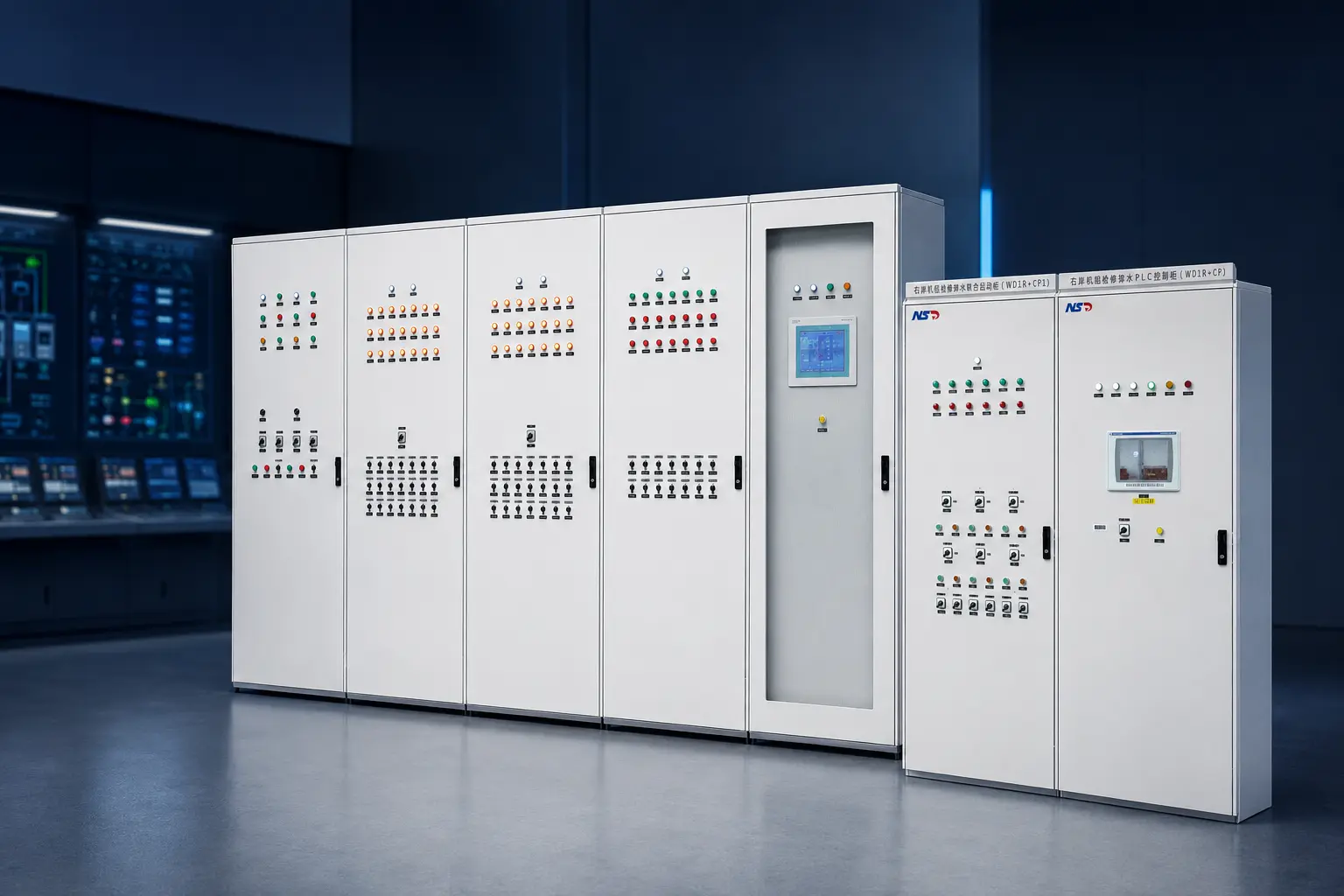
LDS-200 for Power Plant Auxiliary Equipment Control
The LDS-200 Power Plant Auxiliary Equipment Control System is designed for the automatic control of auxiliary equipment in hydropower plants.
Its application scope includes hydraulic pressure units, air compressors, leakage and maintenance drainage pumps, HVAC equipment, water filters, and head-cover pumps. Depending on the project requirements, the system can use PLC controllers or NSD Electric’s GENCESS PAC controller.
The LDS-200 supports real-time data transmission, remote maintenance, and network diagnostics. Soft starters or variable-frequency drives can also be configured according to the connected motor equipment and starting requirements.
Standardized hardware and modular software help simplify system operation, management, and later maintenance. However, the final configuration must be based on the actual controlled equipment and the project’s interface requirements.
LDS-1500 for Centralized Gate Control
Gate control is another important part of hydropower plants, reservoirs, and water conservancy projects.
The LDS-1500 Gate Centralized Control System uses a layered Client/Server architecture and supports centralized monitoring of gate hoists and related electromechanical equipment.
A redundant host configuration can be adopted to support system reliability and data integrity. The system also provides real-time data monitoring, statistical analysis, remote maintenance, and diagnostic functions.
Industrial Ethernet, Profibus, CANbus, and Modbus communication can be used according to the project configuration. Motor-starting options may include staged resistance starting, soft starters, or variable-frequency drives.
Because different projects use different gate hoists and control modes, system selection should begin with the gate type, operating method, controlled equipment scope, and connection requirements of the upper-level monitoring system.
LDS-2000W for Water Treatment Facility Monitoring
NSD Electric also provides the LDS-2000W Water Plant Computer Monitoring System for clean-water plants, wastewater treatment plants, and other water treatment facilities.
The system supports real-time process monitoring, data management, remote diagnostics, and communication with external monitoring devices. Communication can be configured through cable, optical fibre, wireless radio, or GSM according to site conditions.
Its operator station uses a Windows-based platform with graphical configuration tools. Standard interfaces and open APIs can support integration with third-party software and enterprise data systems when required.
As with hydropower auxiliary control, the configuration should be based on the facility layout, process flow, electrical wiring, and specific controlled equipment.
From Individual Equipment to Coordinated Plant Control
Automation and auxiliary control systems should not be selected only by cabinet size or controller brand. The more important questions are what equipment must be controlled, how field signals will be collected, which communication interfaces are required, and how the system will connect with plant-level monitoring.
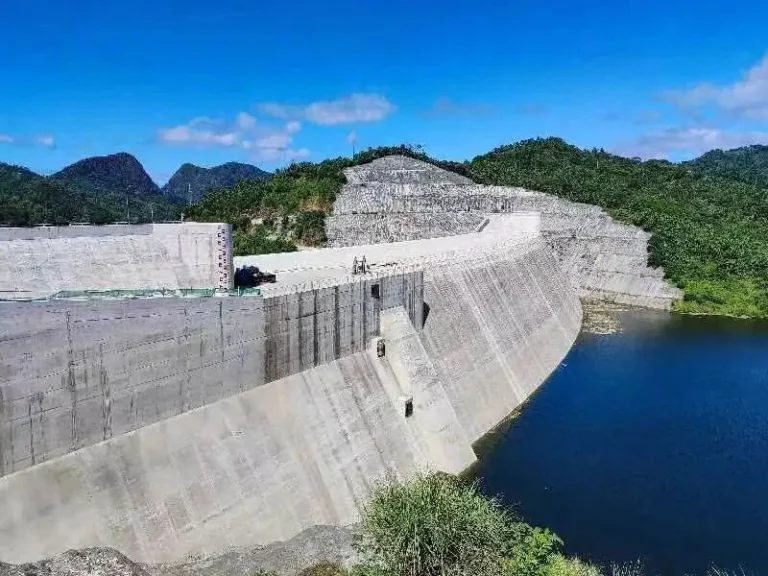
A practical example is the Nam Kong 1 Hydropower Station in Laos. According to NSD Electric’s project information, the supplied secondary electrical package included governor systems, excitation systems, and the LDS-200 plant monitoring and auxiliary control system, together with installation and commissioning support.
This type of coordinated supply helps align the interfaces among major unit control systems and plant auxiliary equipment.
Choosing the Right Automation and Auxiliary Control Solution
Each hydropower or water facility has its own equipment scope and operating requirements. Before determining the control system configuration, the project team should confirm the controlled equipment list, process drawings, electrical interfaces, communication requirements, motor-starting methods, and required control modes.
NSD Electric provides LDS automation and auxiliary control systems for hydropower plants, reservoirs, water conservancy projects, and water treatment facilities. The final system can be configured according to the actual equipment and operating requirements of each project.
For support with hydropower automation, gate control, water facility monitoring, or auxiliary equipment control, please contact NSD Electric.